
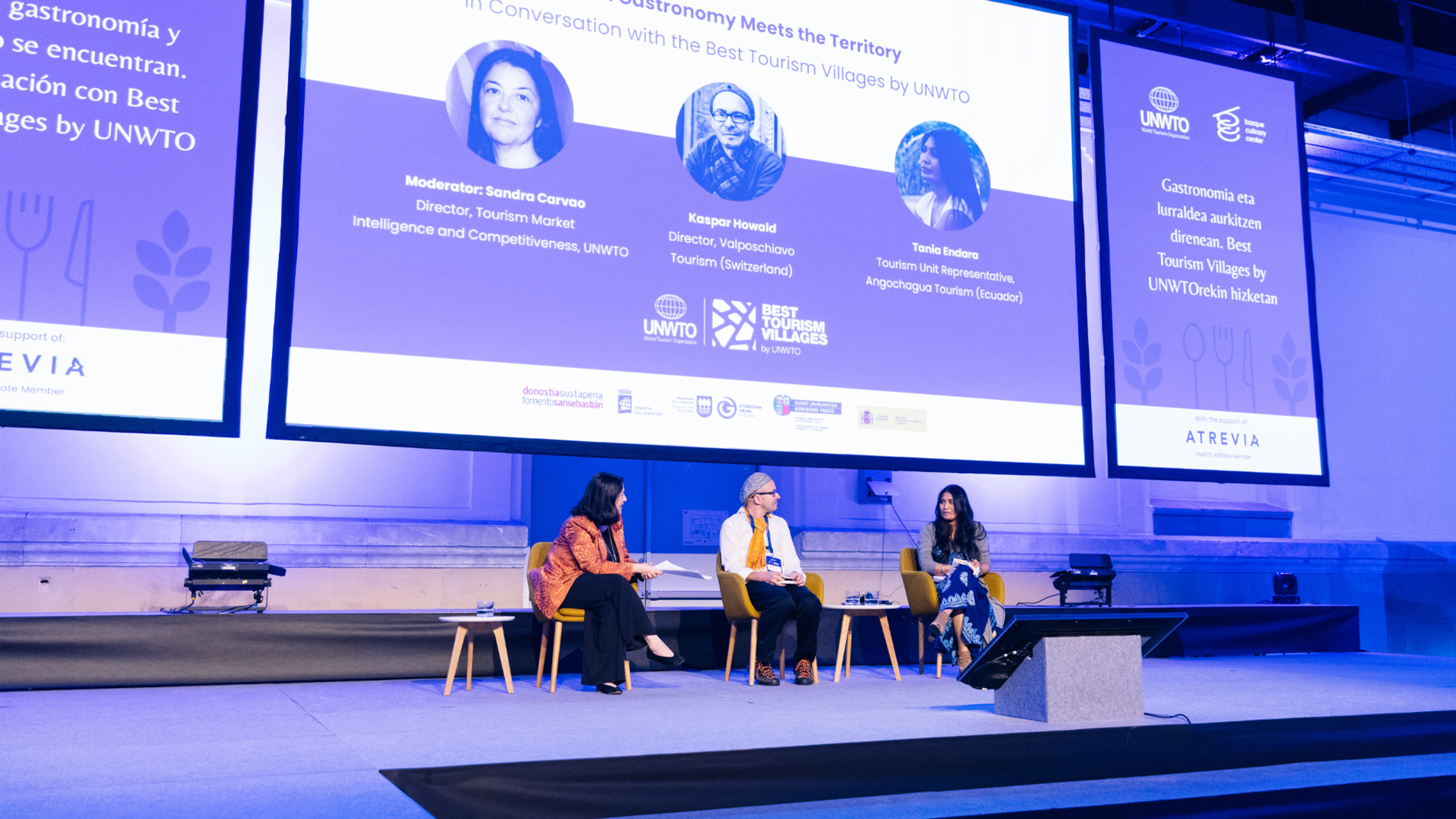
UNWTO strengthens links between agriculture, gastronomy, and tourism
UNWTO celebrated the 8th edition of its World Forum on Gastronomic Tourism, co-organized with the Basque Culinary Center (BCC), focusing on the existing connections between products, gastronomy, and tourism.
The promotion and preservation of local products, the contribution of tourism to sustainable development, innovation, and food waste took center stage as UNWTO and BCC welcomed 300 delegates from 50 countries.
Opening the Forum, UNWTO Secretary-General Zurab Pololikashvili remarked, "Gastronomic tourism can play a central role in promoting responsible agricultural practices, protecting biodiversity, and reducing environmental footprint. It can also create new opportunities for communities to thrive, safeguard their heritage and traditions, and become a driver of growth and diversification for destinations supporting our roadmap toward achieving the Sustainable Development Goals."
Joxe Mari Aizega, General Director of the Basque Culinary Center, added, "We are in an ideal time to promote transformative dynamics and link gastronomic tourism with rural development. Territory, innovation, and creativity are key to successfully advancing toward a new scenario that promotes a responsible gastronomic tourism model centered on caring for people and the environment. Promoting sustainable practices, harnessing the power of technology as an engine of growth, fostering professional development in the sector, and striving to preserve the authenticity and diversity of gastronomic offerings are essential."
The opening ceremony also featured the presence of Rosana Morillo, Secretary of State for Tourism of Spain; Eneko Goia, Mayor of San Sebastian; Azahara Domínguez, Deputy for Mobility, Tourism, and Land Use Planning of the Provincial Government of Gipuzkoa, and Javier Hurtado, Counselor for Tourism, Commerce, and Consumption of the Basque Government.
As part of the forum, globally renowned chefs Martin Berasategui and Pedro Subijana, known for their contributions to the international recognition of Basque cuisine, were named UNWTO Ambassadors for Responsible Tourism.
Tourism for Development and Growth
The Forum highlighted the role that gastronomic tourism plays in preserving local territories and promoting sustainable practices. A high-level group of tourism ministers from Bulgaria, Puerto Rico, and Zimbabwe focused on policies that strengthen agriculture, gastronomy, and tourism. Expert-led discussions also centered on the protection of culinary traditions, the value of geographical indications, and the promotion of sustainability and resilience in rural areas, allowing producers to thrive in an increasingly interconnected and technology-driven world.
Given that gastronomic tourism is one of the pillars of the UNWTO Program for Africa - Tourism for Inclusive Growth, the Forum also explored the sector's potential as a source of inclusive growth throughout the region. In a special intervention, Zimbabwe's First Lady, Auxillia C. Mnangagwa, a committed promoter of African gastronomy, emphasized that "gastronomic tourism worldwide has become an effective tool for attracting tourists, especially those who appreciate the natural and nutritional value of traditional foods. As nations, we should leverage our traditional nutritional cuisines to ensure healthy living and the socioeconomic development of our countries. This is in line with our heritage-based philosophy to promote tourism."
Also, as part of the Forum, Chef Fatmata Binta was appointed by UNWTO as an Ambassador for Responsible Tourism for her role in promoting African gastronomy and community development in her country. Chef Binta is a contemporary nomadic chef connected to the culture, customs, and Fulani cuisine of the largest nomadic group in West and Central Africa.
Emerging Gastronomic Tourism Start-up Contest
In Donostia - San Sebastián, selected finalists from previous UNWTO emerging gastronomic tourism start-up contests presented their ideas. The solutions showcased exceptional culinary experiences documented by renowned chefs (Searchef), streamlining waste management in the hotel sector (Eatinn), celebrating the flavors of Moroccan street food (Machi Mouchkil), establishing sustainability certifications and restaurant guides (Ecofoodies), and introducing an app for locally produced, quality food delivery (Oh les Chefs).
Oh les Chefs emerged as the winner, primarily for its significant potential for international expansion. It will have access to a dedicated workspace at the Digital Gastronomic Laboratory LABe for six months. Additionally, this new company will actively participate in the Basque Culinary Center's Culinary Action! entrepreneurial initiative program and will be a member of the GOe Digital Community for six months.
To date, more than 700 emerging companies from over 100 countries have participated in the contest. Applications can now be submitted for the 4th edition of the UNWTO's emerging gastronomic tourism start-up contest, in collaboration with the Basque Culinary Center and powered by Alpitour World.
Global Roadmap on Food Waste Reduction in Tourism
Building on the recommendations in the UNWTO Global Roadmap on Food Waste Reduction in Tourism, published by UNWTO in collaboration with the United Nations Environment Programme (UNEP), the session "Circular Solutions for Food Waste Reduction" showcased various initiatives undertaken by hotels, restaurants, and cruise companies.
Solutions ranged from prevention measures, such as conscious procurement and menu design, to redistributing surplus food to vulnerable groups and biomaterial processing, as well as circular strategies like composting or energy recovery. Discussions also emphasized the importance of education, innovation, and regulations and policies favorable to accelerating change.
Inaugural Dinner Hosted by Mahaia Kolektiboa Chefs
The inaugural dinner of the Forum was organized by the chefs of Mahaia Kolektiboa, a collective of chefs committed to the evolution of Basque cuisine.
Aitor Arregi (Elkano), Jon Ayala (Laia Erretegia), Xabi Gorrotxategi (Casa Julián), Dani López (Kokotxa), Javi Rivero (AMA), Roberto Ruiz (HIKA), Gorka Txapartegi (Alameda), and Armintz Gorrotxategi (Rafa Gorrotxategi), all chefs belonging to Mahaia Kolektiboa, showcased the essence of Basque cuisine, a hallmark of Donostia - San Sebastián that attracts visitors from around the world.
UNWTO Announces Host for the 2024 World Forum on Gastronomic Tourism
The 2024 Forum will take place in Manama (Bahrain); it will be the first time it is held in the Middle East.
To conclude in an experiential manner, on October 7, attendees will have the opportunity to choose from six different excursions to experience and savor local cuisine.
Additionally, the parallel event "Culinary Plaza," open to local residents and organized by the Basque Culinary Center in collaboration with UNWTO, will highlight culinary specialties from destinations such as Zimbabwe, Saudi Arabia, Porto, and Botswana. This will be done through a culinary fair in a food market format where you can delve into the culinary culture of these corners of the world and taste their cuisine in a unique atmosphere.
This year's Forum is organized by the World Tourism Organization (UNWTO) and the Basque Culinary Center (BCC), with the support of the Ministry of Industry, Commerce, and Tourism of Spain, the Basque Government, the Provincial Government of Gipuzkoa, and the City of San Sebastián.