
Basque Culinary Center Generates an Economic Impact of 228 Million Euros with a Return of 39 Million Euros for the Public Administration
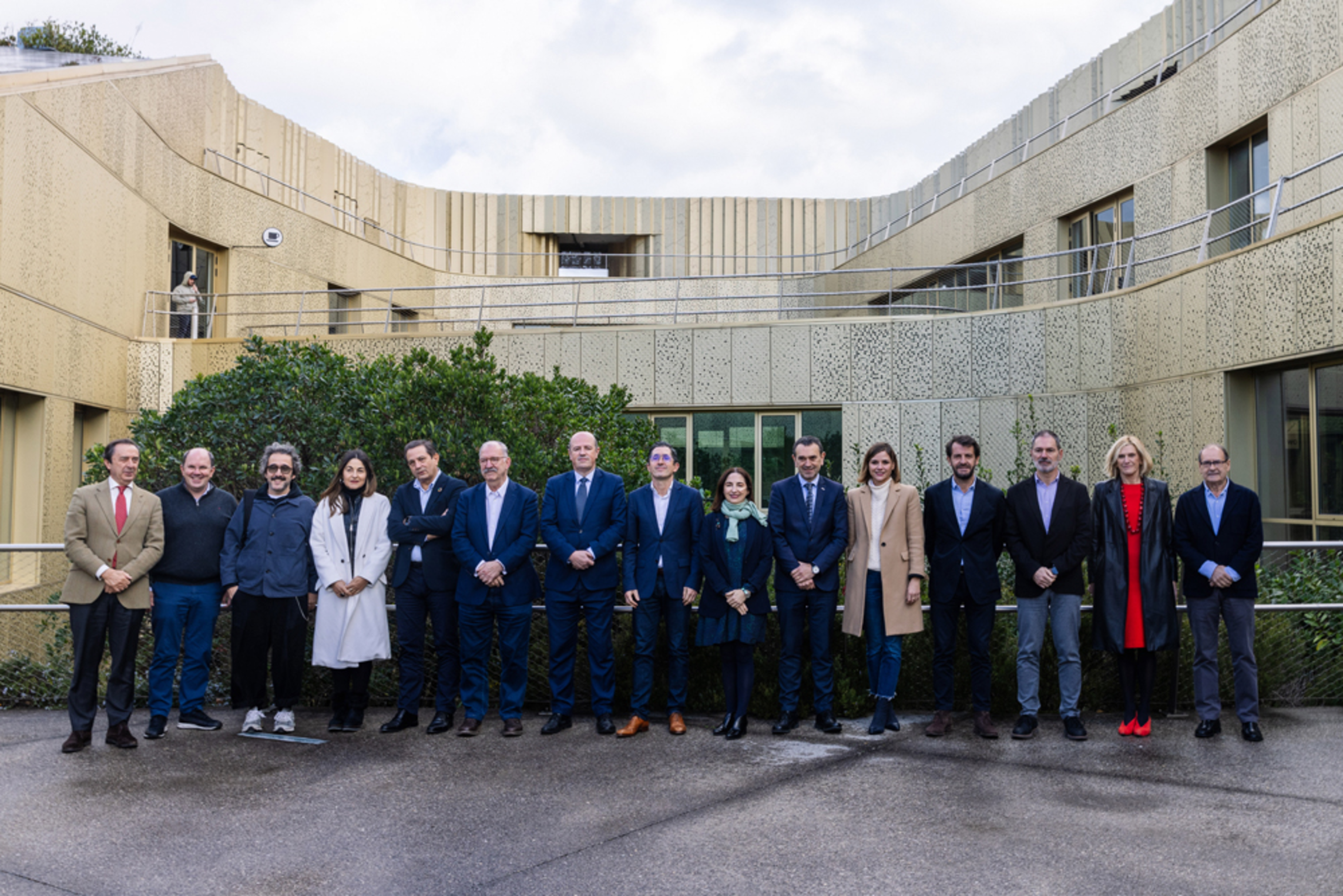
This Thursday, December 14, within the framework of the Basque Culinary Center's Board of Trustees meeting, the institution's highest governing body, a positive assessment of the activities carried out in 2023 was presented. Progress on GOe and EDA, the entity's new strategic projects, was reviewed, and the evolution of the study "Assessment of the Socioeconomic Impact of the Basque Culinary Center" was introduced. This periodic analysis assesses the qualitative impact of the Basque Culinary Center's opening.
The study, conducted by the consulting firm Ikertalde, highlights the Basque Culinary Center's evolution and trajectory over the past decade, demonstrating significant growth in activity reflected in the volume of generated income and expenses, as well as the economic impact on its surroundings. Over the last decade (2012-2022), the economic impact amounts to 228 million euros, contributing nearly 125 million euros to the GDP and providing a return for the public administration (through taxes and social security contributions) valued at 39 million euros.
Focusing on 2022, the figures for growth and impact have considerably increased compared to 2018. The economic impact generated by the Basque Culinary Center, through its direct activities and the induced spending by a significant number of people mobilized throughout the year, is quantified at 35.6 million euros (46% more than in 2018). This impact contributes 19.5 million euros to the GDP (47% more than in 2018) and provides a public return, via taxes and social security contributions, amounting to 6.6 million euros (54% more than in 2018).
In addition to the tangible impact, it's essential to note the intangible and transformative effect of the Basque Culinary Center, crucial for sustaining the current and future competitiveness of the agri-food industry and the gastronomic sector, in which new generations will play a significant role. The high entrepreneurship rate, close to 17%, the notable activity rate of graduates from the Degree in Gastronomy and Culinary Arts of the Basque Culinary Center at 92%, and the support and visibility initiatives for young talent reinforce this vision. In terms of positioning and visibility, the Basque Culinary Center achieved an estimated AVE (advertising value equivalent) of 43.3 million euros in 2022.
The Basque Culinary Center stands as a job-generating ecosystem with a young team (average age of 37) and highly female-dominated (58% women in the workforce). This multidisciplinary team includes profiles associated with teaching, research, professionals in the field of restoration, communication, marketing, etc. In 2022, it totaled 164 employees, with a substantially younger average age than that of the occupied Basque population. The weight of female employment stands out, representing 64% in the case of BCC Innovation, surpassing the female representation in the Basque service sector labor market by 9 percentage points.
Areas of Activity
The Basque Culinary Center advances through its four activity areas: education, gastronomy promotion platform, Technological Research Center, and business and entrepreneurship ecosystem. Apart from the significant impact figures generated in the last decade, new transformation lines for the medium and long term until 2030 are being outlined, focusing on significant expansion around its four activity pillars, with strategic projects such as GOe and EDA.
Education, with nearly 4,360 students, remains the driving force and core of Basque Culinary Center's activity. This activity consolidates its academic scope, with a total of 463 students in the academic year 2022-2023 distributed across undergraduate, master's, and the newly introduced doctoral programs.
Specialized training related to its own titles and "on-demand" training open to the public has surged concerning the 2018-2019 academic year, both in its in-person, online, and hybrid dimensions. Thus, the number of participants has increased by 45% in customized training, 51% in specialized training, and up to 81% in training open to the public, totaling 3,893 students.
The gastronomy promotion platform consolidates a portfolio of high-profile international events while reinforcing events that bolster the positioning of Basque gastronomy. In 2022, a total of 167 activities were developed, physically engaging nearly 20,000 participants.
Among the diverse events, noteworthy ones include the "Basque Culinary World Prize," with a media impact valued at 19.1 million euros in 2022, projecting its presence across five continents and strengthening its position as the "Nobel Prize of Gastronomy." Additionally, congresses held both within and outside the region, such as the World Congress on Gastronomic Tourism in Japan, the Alimentarte International Gastronomic Forum in Colombia, or the Culinary Zinema within the framework of the SSIFF (San Sebastián International Film Festival), and initiatives like Mantala Basque Gastronomy or HARAGI (Basque word for "meat").
BCC Innovation, the gastronomic Technological Center, a member of the Basque Network of Science and Technology and the Spanish Network of R&D+I Centers since 2022, employs a team of 36 people engaged in a portfolio of 90 "transformative" projects. Among these, 10 European projects in research stand out, tracting an average budget of 7 million euros per year. Its project portfolio is linked to society's five major challenges, relating to gastronomy and food science: health, sustainability, digital transformation, product design and development, and sectorial analysis.
This field of activity has progressed by a little over 18% in income compared to the year 2019 and is supported by a continuous and open collaboration ecosystem, working closely with 20 collaborating entities in research, interacting with over 200 organizations, and directly engaging with leading international organizations and industries.
The business and entrepreneurship ecosystem is the area experiencing the most significant growth and projecting the most extensive expansion for the year 2023. This area fosters increasing advisory activity, customized support, and boosting entrepreneurial activity in the food industry and gastronomy. Notable in this regard is the support extended to other territories and countries through transformation projects.
Additionally, Basque Culinary Center promotes the creation of startups through its own program called Culinary Action!, which contributed to the mentoring of 100 startups in 2022.
The Board of Trustees of the Basque Culinary Center
The Board of Trustees is the highest body of the Basque Culinary Center Foundation, comprised of eight of the most renowned chefs in the Basque Country: Juan Mari and Elena Arzak, Pedro Subijana, Martin Berasategui, Karlos Arguiñano, Eneko Atxa, Hilario Arbelaitz, and Diego Guerrero. It also includes institutions such as the Basque Government, Gipuzkoa Provincial Council, Donostia-San Sebastián City Council, entities like Azti-Tecnalia and Mondragon Unibertsitatea, and companies including Eroski, Martiko, Covap, Mahou-San Miguel, Fagor, and AgroBank.