
Innovation, NOLO Beers, and the Beer-Gastronomy Relationship Form the Core Discussion of the EDA Beer Summit
The EDA Beer Summit gathered today world-class brewers and experts for a unique event that saw more than 180 attendees. The event, organized by EDA Drinks & Wine Campus, aimed to explore the current state and future of the beer sector.
EDA Beer Summit is supported by Cerveceros de España and Basque Beer, as well as by the Department of Food, Rural Development, Agriculture, and Fisheries of the Basque Government and the Provincial Council of Álava. It is part of the activities scheduled by EDA Drinks & Wine Campus in anticipation of the opening of its locations in Vitoria-Gasteiz and Laguardia.
Susan Wheeler, a plant scientist and founder of Hop Revolution, emphasized the ideal conditions for growing hops, the impact of climate on their organoleptic characteristics, and the importance of collaborating with breweries to understand how to produce beer during her presentation, “The Terroir of New Zealand and its Impact on Hops and Beer.”
With the growing demand for non-alcoholic beers in the market, Marco Pruner, a fermentation and brewing innovation expert, stressed the need for sensory analysis to better understand this market. In his talk, “Innovative Fermentation Technologies to Produce Low-Alcohol and Non-Alcoholic Beer,” Pruner discussed several innovations that serve as key quality tools in fermentation and pasteurization processes to produce the best beer.
Francois Chartier, an expert in aromatic research, presented his unique beer aroma wheel, designed to help both professionals and enthusiasts identify and understand the aromas in different beer styles. In his talk, “Molecular Dissection of Beer by the Chartier World LAB,” Chartier discussed the gastronomic DNA of beer, aimed at helping professionals better understand beer pairings with food and create new beers adapted to current culinary trends.
In the first panel of the day, titled “Innovation and Beer in Gastronomy,” participants discussed topics such as Mediterranean consumption patterns, beer’s individualized consumption, technological challenges, innovation in recipes, and the rise of non-alcoholic beer. Panelists included Karen Peiró, Head of Brewing at Damm Group; Francisco Ruiz Gallego, Head Brewer at Heineken Spain; Antonio Fumanal, Head Brewer at Grupo Ágora; Javier Aldea, BrewHub Manager at Mahou San Miguel; and Carlos Ávila, Beer Culture at Hijos de Rivera, moderated by Eduardo Olmedo, Deputy Director of the Spanish Brewers Association.
Oscar Saenz of Basqueland Brewing, Aran León of La Pirata Brewing, Igor Berrios of Meta Edabeak, and Eneko Neira of Laugar Brewery spoke about the power of innovation and experimentation, the consumption of craft beer in Spain compared to other countries, challenges in reaching target audiences, especially younger consumers, and changing consumption habits. The panel was moderated by Jabi Ortega, manager of Basque Beer, under the title “Challenges and Opportunities in Craft Beer.”
Elisa Ucar, Director of EDA Drinks & Wine Campus, and Jacobo Olalla, General Director of the Spanish Brewers Association, closed the day by highlighting the main points discussed. They focused on the strong relationship between beer and gastronomy, deeply rooted in Mediterranean culture, where 78% of the Spanish population considers beer a key part of their gastronomic identity. This connection is especially evident during social moments like aperitifs and tapas, where beer is consumed primarily for its taste, accompanied by food, and in the company of friends and family. Unlike other European countries, beer consumption in Spain is closely tied to food, with 90% of beer consumed alongside food.
The innovation in the Spanish beer sector has led to a significant diversification of beer offerings, expanding pairing possibilities with the country’s diverse gastronomy. This development goes beyond barley and hop processing and includes the exploration of new techniques and ingredients, enabling a wide range of beer styles to cater to local tastes. Thus, the combination of tradition and innovation has strengthened the relationship between beer and Spanish cuisine.
Finally, Spain has become a global leader in the consumption and production of non-alcoholic beer, which accounted for 14% of total beer consumption in 2023. Spain leads the world in this segment, with 74% of consumers choosing non-alcoholic beer at some point. Around 90% of non-alcoholic beer consumers were regular drinkers of traditional beer, indicating its acceptance and integration into beer culture. Non-alcoholic beer has also gained prominence in contexts like road safety, where 50% of its consumption is related to driving, promoting responsible enjoyment.
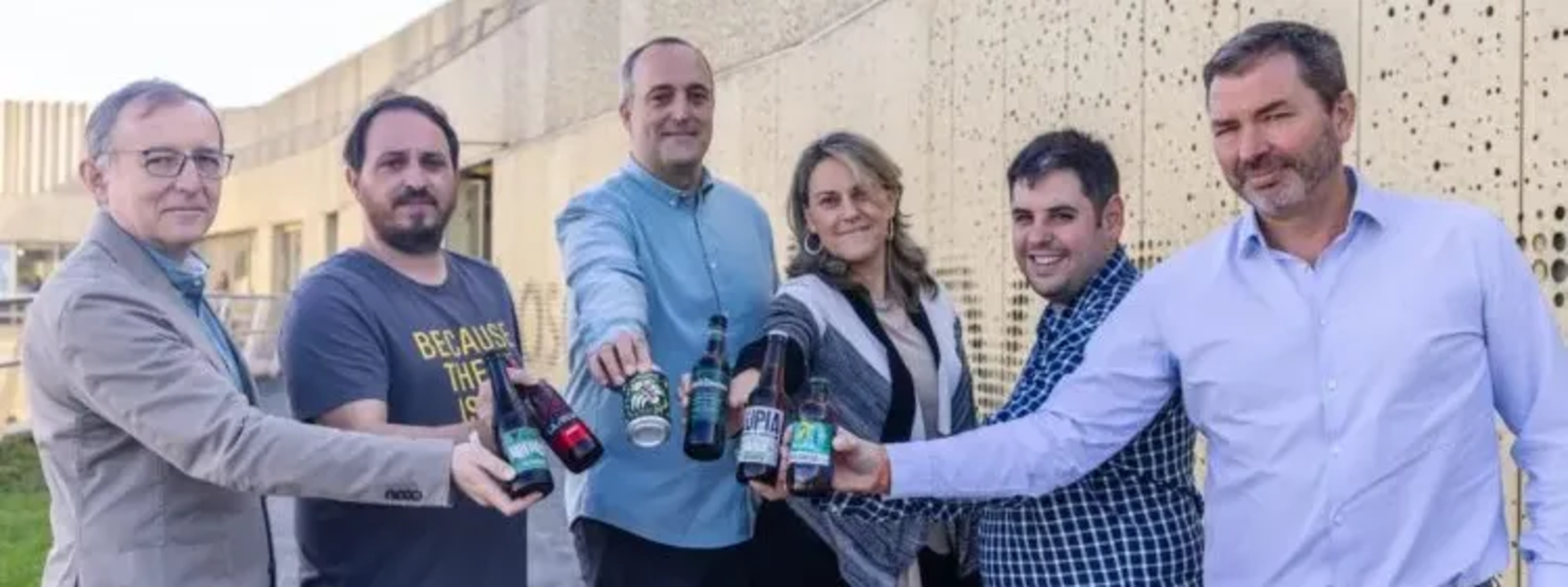
The summit concluded with a tasting of beer and pintxos, featuring offerings like La Salve Munich from Mahou, Águila Sin Filtrar 0.0 from Heineken, Ámbar Montañesa from Ámbar, Lupia Herbal Nugget from Hijos de Rivera, the Gilda from Basqueland, and Voll Damm.
The event was inaugurated by Joxe Mari Aizega, General Director of Basque Culinary Center; Amaia Barredo, Minister of Food, Rural Development, Agriculture, and Fisheries of the Basque Government; and Noemí Aguirre, Provincial Deputy for Agriculture of the Provincial Council of Álava.
“This event is an example of how we want to do things. We want to listen to industry professionals and build EDA Drinks & Wine Campus as a modern, contemporary, and, above all, collective proposal of a community,” said Joxe Mari Aizega, General Director of Basque Culinary Center.
“Over the years, in our country, here in Euskadi, the beer industry evolves positively day by day, always with the changing tides of customs, social habits, and market campaigns,” noted Amaia Barredo, Minister of Food, Rural Development, Agriculture, and Fisheries of the Basque Government.
Noemí Aguirre, Provincial Deputy for Agriculture of the Provincial Council of Álava, shared that “in our initiative to promote crop diversity, we are boosting hop production, a key ingredient in brewing quality beer. Through this action, we learn together about the importance and value of local products, highlighting how these ingredients can elevate the quality of our offerings.”