
Mycotour Will Drive an International Network of Restaurants Specializing in Mushroom and Truffle Cuisine
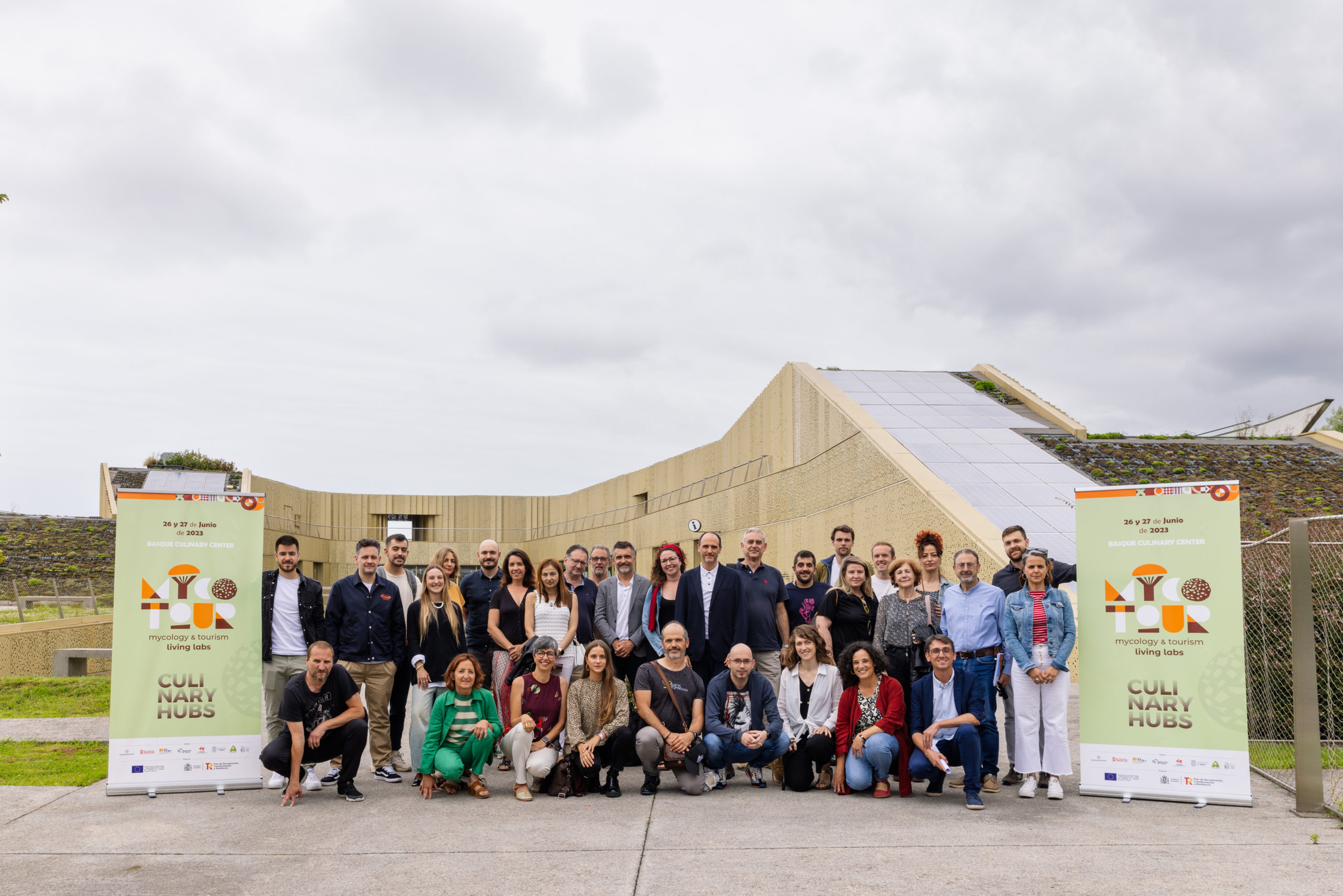
On June 26th and 27th, BCC Innovation, the technological center in gastronomy at the Basque Culinary Center, hosted two enlightening and intense days during which a total of 35 renowned chefs, prominent researchers, and experts explored culinary, mycological, and agri-food opportunities offered by wild mushrooms and truffles in our regions, as part of a new edition of Myco-Culinary-Hubs.
The Culinary Hubs initiative was created by the European Mycological Institute (EMI) in 2018 and is promoted in Spain by Mycotour. This project contributes to structuring, improving, and internationalizing mycological experiences in rural areas in an organized, sustainable, smart, and inclusive manner. Currently, there is no common platform for comprehensive and informed mycological activities, particularly in the mycotourism sector. This underscores the importance of the Myco-Culinary-Hub, designed around addressing specific challenges that, as part of "responsible gastronomy," aim to promote these practices democratically.
The event, coordinated by Fernando Martínez Peña, scientific director of Mycotour and a researcher at CITA Aragón, aimed to "create narratives and improve the infrastructure that supports the mycological sector. This includes developing best practice protocols for mycological restaurants and informing users about safe and democratic mycotourism practices." In essence, it was an experience of co-creation aimed at generating value based on scientific knowledge.
The mycogastronomic innovation challenges discussed at the Myco-Culinary-Hub were:
a) Healthy combinations of mushrooms, legumes, and local vegetables.
b) The potential of mushrooms as an alternative for individuals with special needs.
c) Responsible use of truffles and truffle products without imitation aromas.
d) Intercultural cuisine with mushrooms from other continents.
e) Pairings of wines, mushrooms, and truffles.
f) Adapting mycogastronomy to the consequences of global change.
The Living Labs methodology was employed to address each of these challenges, creating an ecosystem of experimentation in which scientists, professionals, and all those interested in organizing and disseminating mycotourism experiences participated in the co-creation process. Different "operational co-innovation teams" were formed for each challenge, led by the BCC Innovation team, where ideas were developed and worked on, which were later shared with the rest of the participants.
Thus, a diverse group of 35 experts, primarily chefs and researchers from the Basque Country, Castilla y León, Catalonia, and Aragón, were brought together to tackle the established challenges. However, the roles of attendees expanded to include other fields of science, education, research, and gastronomy. Researchers in marketing, oenologists, Michelin-starred restaurants, educators, food designers, sommeliers, experts in functional foods, chefs with mycology-based kitchens, and others played additional roles in the event.
One noteworthy result of these challenges was the proposal to create an excellent international network of restaurants specializing in sustainable, healthy, and inclusive mushroom and truffle cuisine. This network would have an advisory committee connected to the Myco-Culinary-Hub of the Mycotour project.
"This is the first time we've hosted a project of this nature, where we share concerns and viewpoints, bringing together top chefs to address the challenges presented. These topics cover everything from healthy applications to the semiotic effect of images on consumers, the fungal world as an alternative for individuals with special needs, and more," emphasized Nahuel Pazos, a Chef researcher at BCC Innovation.
Regarding the selection of participating chefs, the focus was on those specializing in mushroom/truffle cuisine, demonstrating innovation sensitivity, teamwork capabilities, and a preference for rural areas, collaboration spirit, and communication skills. Elena Lucas and Diego Muñoz (La Lobita), Óscar García (El Baluarte), Melania Cascante (Los Villares), Maria José Meda (El Batán), Rubén Catalán (Hotel Torre del Visco), Nacho Liso (Método), Carmelo Bosque (Lillas Pastia), José Tazueco (Saboya 21), Quico Arumí (Can Jubany), Lluc Crusellas (Pastisseria), Eduard Aliberch (Mas Monells), Carlos Casillas (Barro), Ángel Alonso (La Pineda), and Ivan Hernández (Toixos and Casa Cebreros).
Nahuel Pazos also highlighted the value of gastronomy as a driver of change. "BCC Innovation's mission, in this context and in general, is to build knowledge in the field of gastronomy and contribute to the advancement and improvement of its value chain," explained the chef.
The various proposals from the teams will be prioritized by the Mycotour project coordinators and will begin to be developed in the coming months, with the aim of presenting the first results by the end of 2023. In this regard, the project coordinators will structure the ideas, share them with the collaboration network, and propose the development of mycogastronomic innovation projects to interested chefs throughout the duration of the Mycotour project.
These projects, led by the chefs, will benefit from scientific-technical support from the network's experts and mentoring from BCCInnovation, which will provide a pool of hours for technological services (characterization, gastronomic advisory, sensory analysis, lyophilization, marketing, and dissemination, etc.), as well as a budget for consumable materials and product purchases for innovations.