
Innovation, Identity, and Sustainability Key in the Wine Industry According to Young Talents Gathered at Basque Culinary Center
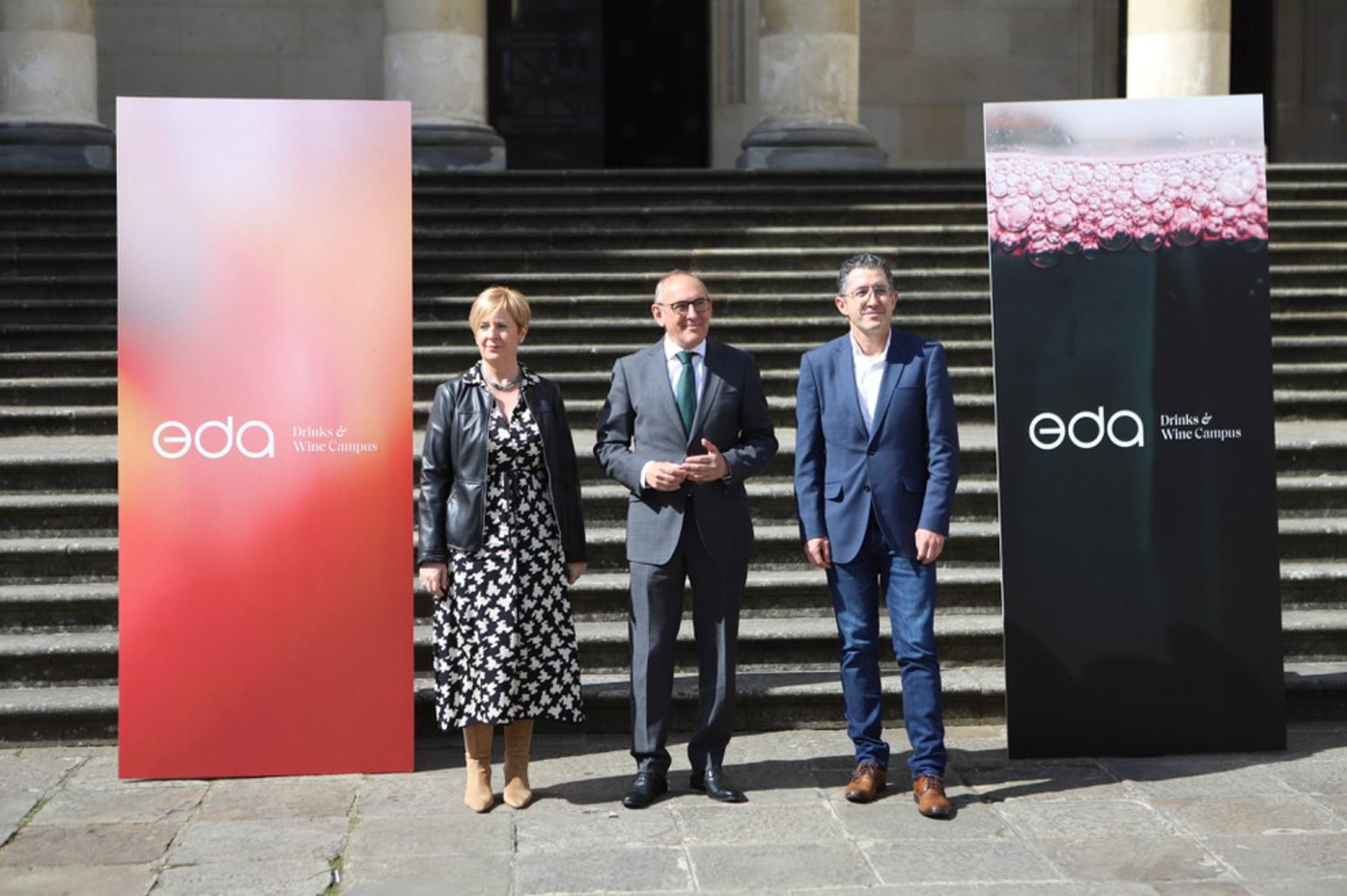
Innovation, identity, sustainability, territory, entrepreneurship, and generational change are some of the topics that young wine professionals have reflected upon in a gathering at the Basque Culinary Center to share their perspectives on the industry. This event is part of the EDA Drinks and Wine Campus project, an initiative aimed at becoming an international reference and prestigious center in the wine and beverage sector.
Joxe Mari Aizega, General Director of Basque Culinary Center, reflected on the "important entrepreneurial and innovative movement led by young individuals in the wine sector, connecting culture, identity, and tradition with modernity." He introduced EDA Drinks & Wine Campus to the event attendees, stating, "EDA aims to contribute to the transformation of the wine and beverage sector through a multidisciplinary approach encompassing technical sciences, management, culture, cuisine, and hospitality." EDA Drinks and Wine Campus will materialize in 2026 with a headquarters in Vitoria-Gasteiz, a wine-focused site in Rioja Alavesa, and experimental plots. According to Joxe Mari Aizega, the strategic foundations of the project, as well as the contents and training, innovation, and entrepreneurship programs, are being defined and validated throughout 2023. Additionally, this year will see the exact locations of the EDA sites determined, the construction process initiated, and the project's alliance and agreement strategy designed. In 2024 and 2025, the buildings will be constructed, sectoral events will continue to be developed, and parallel activities related to training and entrepreneurial support will commence. EDA has received institutional support from the Provincial Council of Álava and the Department of Economic Development, Sustainability, and the Environment of the Basque Government.
During the event's inauguration, Eduardo Aguinaco, Director of Strategic Areas of the Provincial Council of Álava, expressed that "the wine sector is an engine of economic development open to the world. What we aim to achieve with EDA is for it to be a meeting place, a space for listening, building, and attracting new projects. We want it to be a lever for young people like you, with a restless and non-conformist spirit, to convey your values, which will help shape our territory and identity."
Meanwhile, Bittor Oroz, Deputy Minister of Agriculture, Fisheries, and Food Policy of the Basque Government, argued that "with knowledge, a strategy, and appropriate entrepreneurial tools and instruments, we want to reach the global stage. We will promote maximum excellence linked to the narrative and rooted in our culture. EDA's objective is to support the sector. We will develop identity-linked products of excellence through an international network that we will all help position."
The morning's first panel discussion, titled "Starting a Business in the Wine World and Not Giving Up: Challenges and Rewards," featured Óscar Mestre (Bodega Óscar Mestre and Bodegas Riko), Josu Amatria (Bodega Amatria Vinos y Viñedos), and Jade Gross (Jade Gross Wines). The panel was moderated by Aitor Irazu (Makatzak Wild Wines). They emphasized the importance of winning and reinvesting as key elements in growth and part of the entrepreneurial learning process. They also discussed passion, risks, obstacles, financing, and the continuous sacrifice when launching a new project.
Next, Roc Gramona (Gramona Wines), Carlos López de Lacalle (Bodega Artadi, Izar Leku), Alain Quintana (Bodega Quintana), and Álvaro Loza (Bodega Álvaro Loza) shared their thoughts in the panel discussion on "Viticulture, Territory Defense, and Future Challenges." Participants agreed that the winegrower and wine producer model should focus on small wineries and that there is a need to regulate the oversupply. The panel discussion was moderated by journalist Yolanda Ortiz de Ari.
In the following panel discussion, Eduardo Eguren (Bodega Cuentaviñas), Judit and Juan Valdelana (Bodega Valdelana), Juan Príncipe (Bodega César Príncipe), and Martina Prieto Pariente (Bodegas Prieto Pariente and José Pariente) emphasized the concept of identity when discussing wines within "What Wines Do We Want to Create as Young People?" They highlighted aspects such as the need to define and design a roadmap, innovative and distinctive production methods as attractive options for young people entering the wine world. Lorea Mendizabal, an alumna and restaurant professor at Basque Culinary Center, facilitated the panel.
The final panel discussion of the event was "Marketing and Communication in the Digital Age." Participants included Estela Lecea (Bodegas Lecea), María Santolaya (Bodegas Roda, La Horra), Bertol Izagirre (Bodega Gorka Izagirre), and Pablo Nieto (La Lagareta). They emphasized the combination of digital media and personal communication. Identifying the target audience, maintaining close management, and image were among the other topics discussed by the panelists. The panel was moderated by the director of EDA Wine and Drinks Campus, Elisa Ucar.